Sourcing fresh produce for Saudi Arabia's Eastern Province requires matching export documentation to Saudi Food and Drug Authority rules before the vessel sails. You manage fresh fruit logistics into Dammam by verifying that your phytosanitary certificate matches your commercial invoice, ensuring cartons carry Arabic labels, and booking a perishable transfer service ahead of arrival.
Why route wholesale fruits and vegetables directly to Dammam?
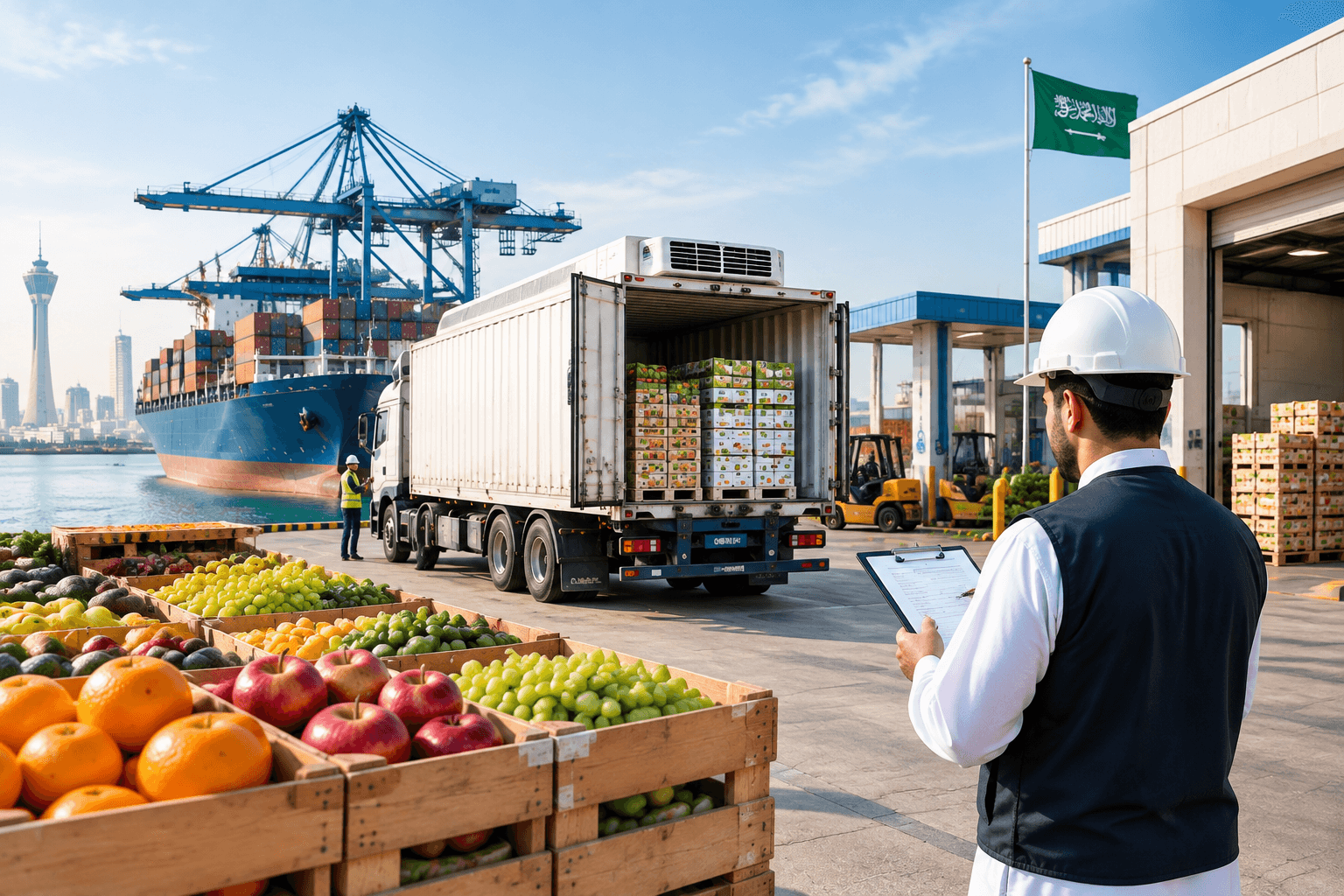
Routing shipments through King Abdulaziz Port puts produce immediately inside the Eastern Province, cutting out the overland transit from Jeddah. Saudi Arabia relies on imports for 80 to 85 percent of its fresh supply over the 2024 to 2026 period, feeding a national fruits and vegetables market that Mordor Intelligence estimates will reach 7.53 billion USD in 2026.
Using Dammam directly means less time on a truck and more shelf life for the wholesale fruit and vegetable distributors feeding regional markets. The direct sea route simplifies the cold chain and reduces the handling stages before the pallets reach the warehouse.
How do standard packing formats determine your sea freight costs?
Standard carton weights and container limits dictate your exact payload, which decides the per-kilo freight rate you pay to Dammam. Our Cavendish banana specification uses a 13.5 kg carton, which loads to a maximum of 20.79 metric tons inside a 40-foot high-cube reefer.
Customs duty on most imported food and agricultural products is set at 5 percent for 2026, according to the USDA Foreign Agricultural Service. Maximising the container payload spreads the fixed sea freight and terminal handling fees across more cartons. Packing formats always follow the order, so confirm the current container load with your supplier before booking freight.
What clearance routes can a buyer choose for Saudi Arabia?
Importers clear Dammam port either by holding their own regulatory approvals or by routing the shipment through a supplier who already holds them.
| Incoterm | Clearance responsibility | Best suited for |
|---|---|---|
| CFR | Buyer manages clearance and holds the SFDA permit | Established importers with a dedicated Saudi customs broker |
| CIF | Buyer manages clearance and holds the SFDA permit | Buyers requiring insured transit under their own permit |
| DDP | Nawa Fresh clears through our Saudi company | Buyers importing without your own import permit |
DDP through our Saudi company provides a direct route for buyers operating without your own import permit, removing the clearance risk at Dammam. CFR and CIF leave the import process entirely to the buyer, which works best for established distributors who manage their own port operations.
Which documents does the SFDA require for clearance?
Saudi customs will hold a reefer at Dammam if the commercial invoice, certificate of origin, and phytosanitary certificate do not align perfectly. A phytosanitary certificate is an official government document proving the crop was inspected and found free of quarantine pests before export.
The Saudi Food and Drug Authority mandates that an official phytosanitary certificate must be provided by the competent authority in the exporting country when importing fresh fruit and vegetables. Importers normally send draft copies of all documents to their Dammam broker for checking before the supplier loads the container. Always confirm the current documentary requirement with your customs broker before shipping.
What are the Gulf Technical Regulation limits for fresh produce?
The cargo must pass specific Saudi border protocols governing fruit quality and pesticide residue limits. The Saudi Food and Drug Authority requires that fresh vegetables and fruits comply with Gulf Technical Regulation No. 123, which outlines the general requirements for fresh produce.
The SFDA also enforces strict chemical thresholds, requiring imported fruits and vegetables to be free from chemical and pesticide residue, or within the allowable limits outlined in Gulf technical regulation SFDA.FD 382/2019. Testing is standard practice at the port, and a failure to meet these exact residue limits results in the container being rejected.
How must cartons be labelled for Saudi customs?
Labelling non-compliance is a primary cause of delays during physical inspections at King Abdulaziz Port. The Saudi Food and Drug Authority rules state that prepackaged food product labels must be in Arabic or include an Arabic language translation.
This means wholesale fruit and vegetable suppliers must ensure the carton artwork or applied stickers display the product name, origin, and packing details in Arabic before the pallets are loaded. Fixing label errors at the Dammam terminal is expensive and breaks the cold chain.
How do you manage container receiving at Dammam?
You secure the cold chain by booking a local perishable transport provider days before the vessel docks. While the customs broker processes the paperwork, the logistics provider waits for release to immediately unplug the reefer and transfer it to a temperature-controlled facility.
A reefer left sitting at the terminal accrues high daily plug-in charges and risks temperature spikes if port power is interrupted. Planning the immediate transfer protects the shelf life of the fruit.
What happens if my phytosanitary certificate contains a spelling error?+
Can I import fresh produce into Saudi Arabia without my own import permit?+
Do banana container loads change during the year?+
How long does SFDA clearance take at Dammam?+
Check the packing formats and container load for this season's Cavendish bananas
See the exact specifications for 13.5 kg cartons and full reefer payloads to calculate your landed cost in Dammam.
View Cavendish banana specificationsSources
- Mordor Intelligence, Fruits and Vegetables in the Kingdom of Saudi Arabia Industry
- USDA Foreign Agricultural Service, Exporter Guide Annual Riyadh Saudi Arabia 2026
- Nawa Fresh, Cavendish banana specifications
- Saudi Food & Drug Authority, Food to the Kingdom of Saudi Arabia
- Saudi Food & Drug Authority, General Requirements for Fresh Vegetables and Fruits
- International Trade Administration, Saudi Arabia Labeling/Marking Requirements