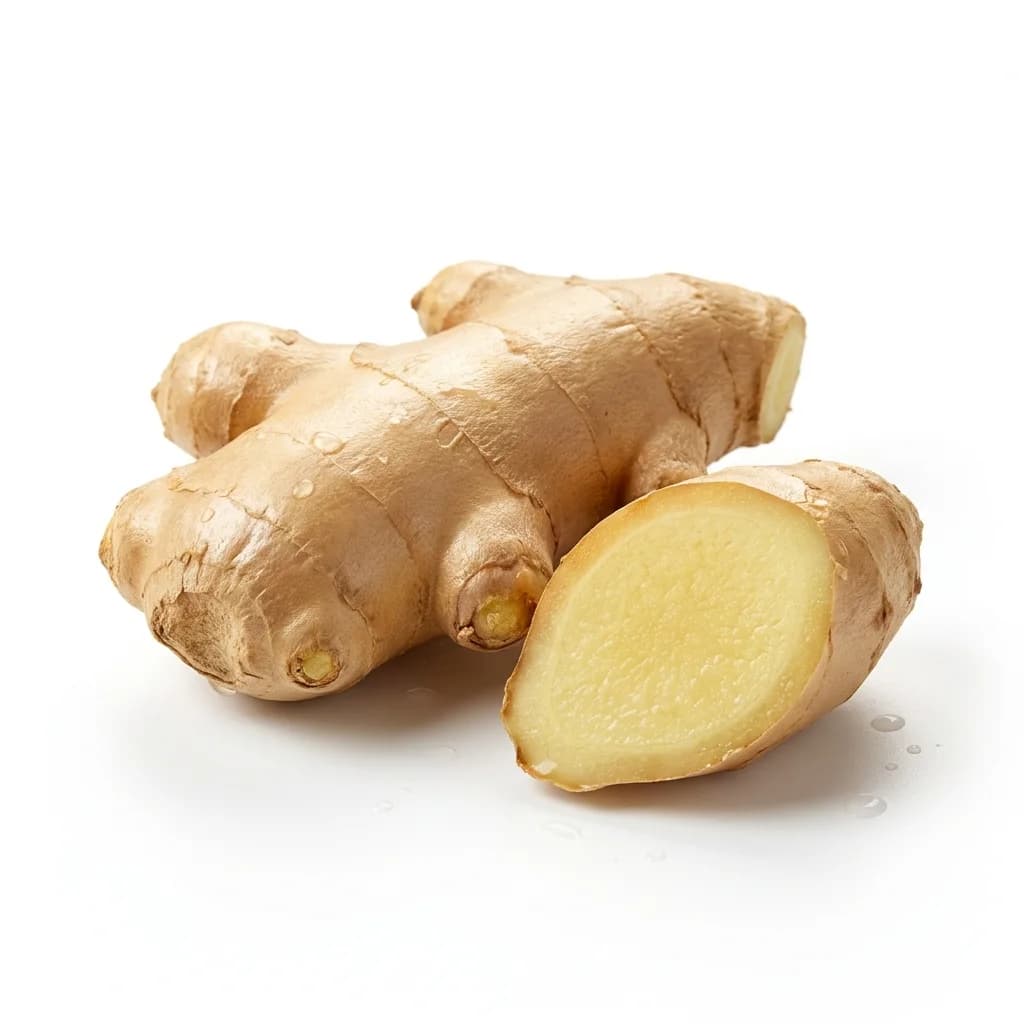
Chinese fresh ginger dominates the Saudi Arabian import market by providing the sheer volume scale necessary to supply the Gulf Cooperation Council. According to IndexBox, China holds an 80 percent share of ginger imports to Saudi Arabia in value terms, effectively setting the regional pricing floor. Structural cost advantages at origin and streamlined shipping lanes into Dammam and Jeddah allow Chinese exporters to undercut secondary suppliers while meeting wholesale demand.
Why does China control the Saudi Arabian ginger market?
China maintains overwhelming market dominance in the Middle East through structural cost advantages and unmatched volume scale. The size of the East Asian harvest ensures uninterrupted availability throughout the current season. This continuity is the primary requirement for Saudi distributors managing high-turnover retail and catering contracts across the Gulf, who cannot afford gaps in supply.
The capacity to load consistent shipments directly out of East Asia allows a china ginger exporter to secure highly competitive sea freight rates. These economies of scale enable suppliers to land the product at a lower unit cost than competing origins can achieve. While this origin provides unmatched volume and cost advantages, importers sacrifice the premium differentiation found in specialty crops, forcing them to compete entirely on price and operational efficiency.
Nigeria functions as the primary alternative origin for buyers seeking supply chain diversity. According to IndexBox, Nigeria accounts for a 9.2 percent share of ginger imports to Saudi Arabia in value terms.
The Kingdom itself operates as a major regional redistribution hub for neighbouring states. According to IndexBox, Yemen, Bahrain and Qatar hold a combined 79 percent share of Saudi Arabia ginger exports in value terms. The United Arab Emirates, Kuwait and Oman absorb the remaining volume, representing a combined 21 percent share of Saudi Arabia ginger exports in value terms, according to IndexBox.
What are the standard wholesale packaging formats for ginger?
Buyers dictate the packaging format based on their specific downstream retail or catering distribution channels. The standard specification is a ventilated carton or a PVC box, which protects the fresh produce from moisture buildup and prevents decay during the lengthy ocean transit from Asia.
Importers frequently ask for precise box weights to match their warehouse handling. A smaller carton lets the load be cross-docked at the wholesale market without repacking.
Exporters consolidate these cartons into high-capacity refrigerated equipment to maximise the payload per shipment. According to Nawa Fresh product specifications, the standard Nawa Fresh ginger container capacity is 22-24 tons. This heavy loading requires careful pallet configuration to maintain adequate airflow around the produce container. According to the same published specifications, Nawa Fresh sets a minimum order for ginger of 1 container.
Standard export preparations for this trade lane require strict handling protocols to ensure arrival quality.
- Ventilated cartons or PVC boxes to manage humidity and prevent condensation
- Palletised loading within standard twenty-foot or forty-foot reefer units
- Strict temperature controls maintained from the packinghouse to the destination port
- Precise grading by rhizome size, skin appearance and maturity level
Retail pricing expectations inside the Riyadh metropolitan area
Baseline retail pricing in the Saudi capital directly reflects the low landed cost achieved by sourcing Chinese fresh ginger at scale. Retail prices remain remarkably stable throughout the current season, driven by consistent arrivals at the major seaports.
During the current marketing period, the lower bound retail price for ginger in Riyadh is 3.34 SAR per kg, according to Selina Wamucii. The same source notes that the upper bound retail price for ginger in Riyadh sits at 5.56 SAR per kg. For imperial measures, the lower bound retail price for ginger in Riyadh is 1.51 SAR per lb, while the upper bound retail price for ginger in Riyadh is 2.52 SAR per lb, according to Selina Wamucii.
| Retail measure in Riyadh | Lower bound | Upper bound |
|---|---|---|
| Per kilogram | 3.34 SAR | 5.56 SAR |
| Per pound | 1.51 SAR | 2.52 SAR |
The narrow band between these upper and lower bounds indicates a highly commoditised retail environment where consumers expect consistent pricing. To preserve their margins within these fixed consumer price limits, a fresh produce supplier must negotiate precise Cost and Freight (CFR) terms. A CFR agreement dictates that the seller covers both the cost of the goods and the ocean freight to the named destination port, shifting the transit rate risk away from the buyer.
How much volume do Saudi buyers typically require?
Commercial trade on the Asia to Gulf corridor operates almost entirely in full container loads to justify the ocean freight expenditure. Wholesale fruit and veg suppliers moving goods into the Kingdom must meet strict volume thresholds to serve hypermarket chains and the extensive regional redistribution network.
The practical floor on this corridor is a single full container, which is also the minimum we load. Larger importers schedule several containers across a season so that arrivals keep pace with their sales, and agree the loading dates with the supplier in advance.
What customs documents are required for fresh produce clearance?
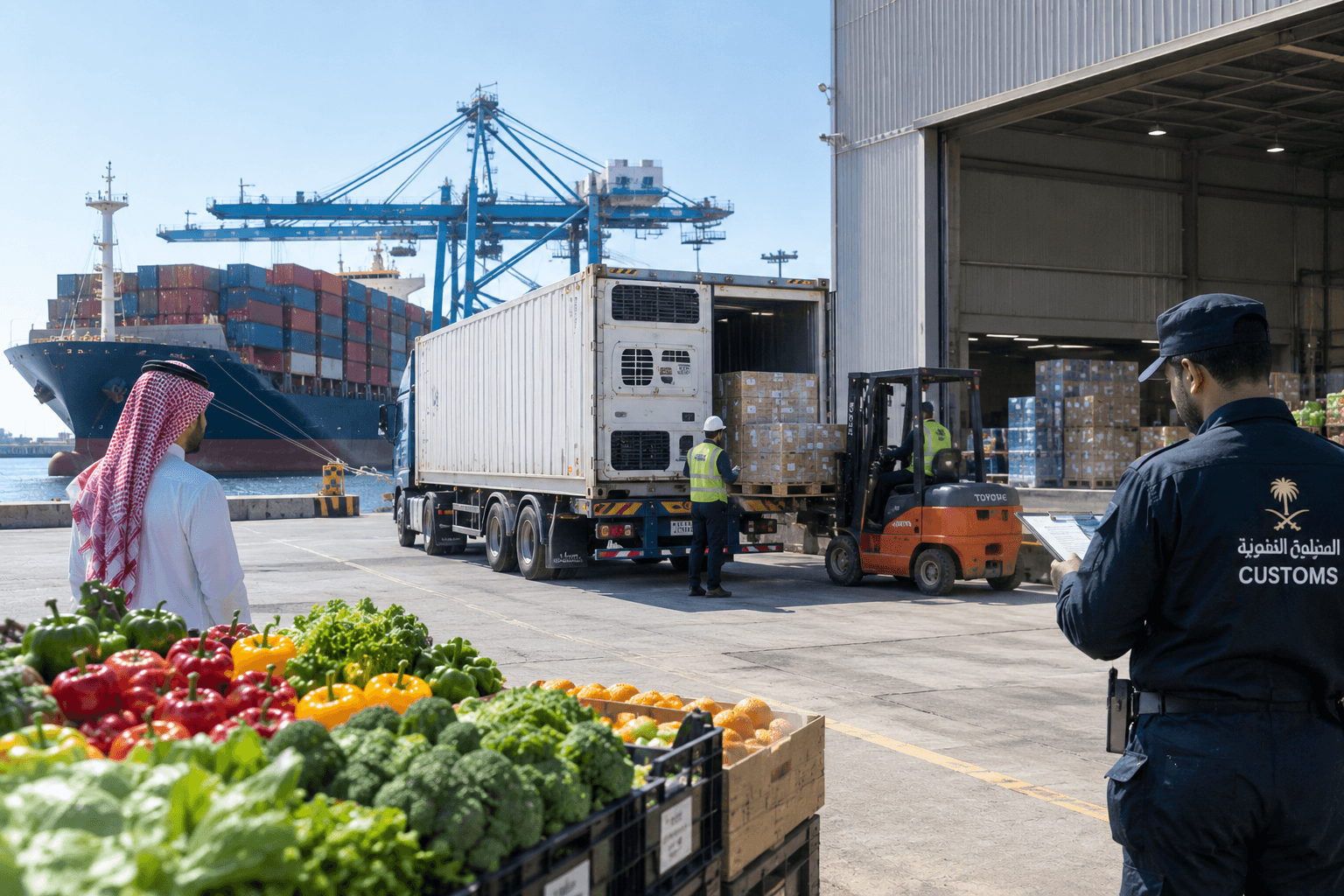
Smooth customs clearance into the Kingdom requires exact documentation matched perfectly to the correct customs classification. The Saudi Food and Drug Authority (SFDA) mandates strict adherence to its import protocols to prevent costly delays or rejection at Dammam or Jeddah ports.
Importers must make sure the commercial invoice and packing list declare the correct Harmonized System code. Ginger is classified under HS heading 0910. Ginger that is neither crushed nor ground, which is how fresh ginger ships, falls under subheading 0910.11, and crushed or ground ginger under 0910.12, according to the World Customs Organization nomenclature. Saudi Arabia extends the six-digit code with national digits, so confirm the full tariff line with your customs broker before the documents are issued.
The mandatory per-shipment paperwork for releasing a commercial produce container at a Saudi port includes several critical documents.
- A commercial invoice detailing the exact HS code, volume and origin
- A Certificate of Origin authenticated by the relevant chamber of commerce
- A phytosanitary certificate confirming the lot is free from pests and soil
- A Bill of Lading clearly stating the destination terminal in Saudi Arabia
- SFDA registration documentation held by the receiving importer
What is the current market share of Chinese ginger in Saudi Arabia?+
Which countries act as secondary suppliers of ginger to the Kingdom?+
What is the capacity of a standard refrigerated ginger container?+
How much do Saudi consumers pay for fresh ginger?+
What are the main re-export destinations for Saudi ginger?+
View our fresh ginger availability
Review current packaging formats, container capacities, and minimum order requirements for your destination market.
View ginger product specifications