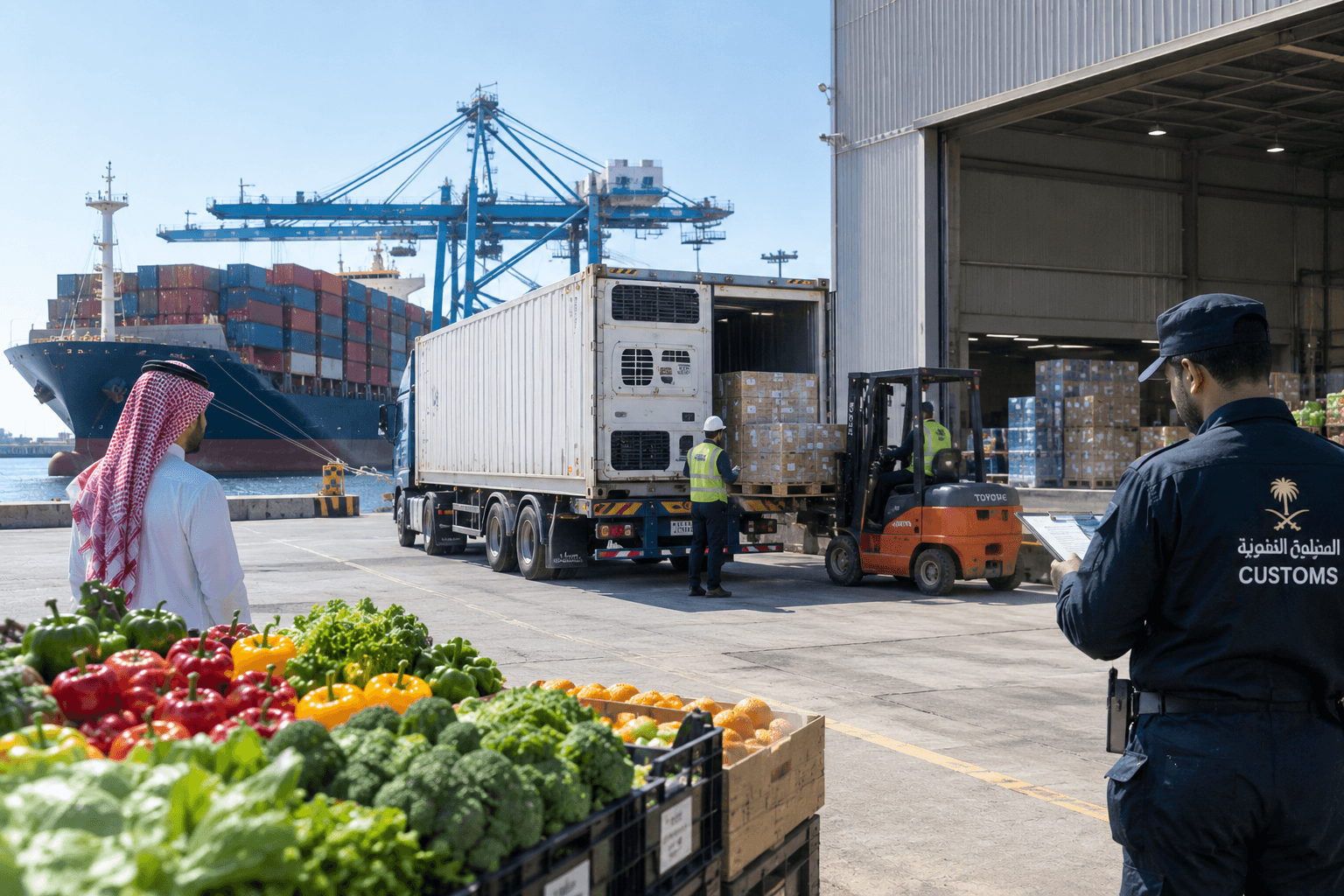
Saudi supermarkets can buy Chinese produce without holding their own import permit when the supplier imports it through its own Saudi company. A local fruit and vegetable supplier in Saudi Arabia acts as the importer of record, manages all border clearance, and delivers the cargo directly to the retail distribution centre. This structure removes the need for an in-house permit and shifts the compliance risk entirely to the supplier.
Why do Saudi regulations require an import permit?
Every shipment of fresh produce entering Saudi Arabia has to meet the Saudi Food and Drug Authority's import rules, and the importer needs the permits to bring it in. Under Saudi Food and Drug Authority rules, imports of fresh fruit and vegetables must be accompanied by an official phytosanitary certificate provided by the competent authority in the exporting country.
The same authority mandates that plants and plant products must be inspected by an official officer from the competent authority in the exporting country and found free from quarantine and non-quarantine pests. Managing these origin inspections and matching them to a local permit takes dedicated compliance staff.
How does outsourcing clearance shift the risk?
Purchasing through an exporter's local Saudi entity shifts the legal role of importer of record away from the supermarket and onto the supplier. Maintaining your own permits requires dealing with foreign establishment registrations, document authentication, and direct liability at the border. When you outsource the compliance process, the supplier's Saudi company holds the import permit. For supermarket chains and wholesalers in Riyadh, this removes the financial risk of demurrage or rejected cargo if a document is queried at the port.
| Responsibility | In-house import | DDP via local entity |
|---|---|---|
| Importer of record | Supermarket | Supplier |
| SFDA permit requirement | Maintained by buyer | Handled by supplier |
| Customs duty settlement | Paid by buyer at border | Included in delivered price |
| Clearance liability | Held by buyer | Held by supplier |
| VAT (15%) | Paid by buyer at import | Charged on the supplier's Saudi invoice |
Supermarkets purchasing on a Delivered Duty Paid basis use the local entity route to turn variable border costs into a fixed delivery price. This structure suits retail buyers who want to allocate their resources to distribution rather than customs management.
What are the door-to-door delivery costs and timelines?
A Delivered Duty Paid structure covers the complete transit from the Chinese packing house to the Saudi distribution centre, moving the cargo on a single invoice. The timeline includes ocean freight, port discharge, customs clearance, and final road haulage.
During clearance, the local entity settles all tariffs. Data published by the USDA Foreign Agricultural Service for 2026 shows the general customs duty rate applied to most imported food and agricultural products in Saudi Arabia is 5%. In a Delivered Duty Paid agreement, this duty is absorbed into the delivered price, so the buyer has no customs payments to make. The same USDA report notes the 15% value added tax on most goods sold in Saudi Arabia. It appears on the supplier's Saudi invoice, as on any local purchase.
What container loads apply to Chinese staples?
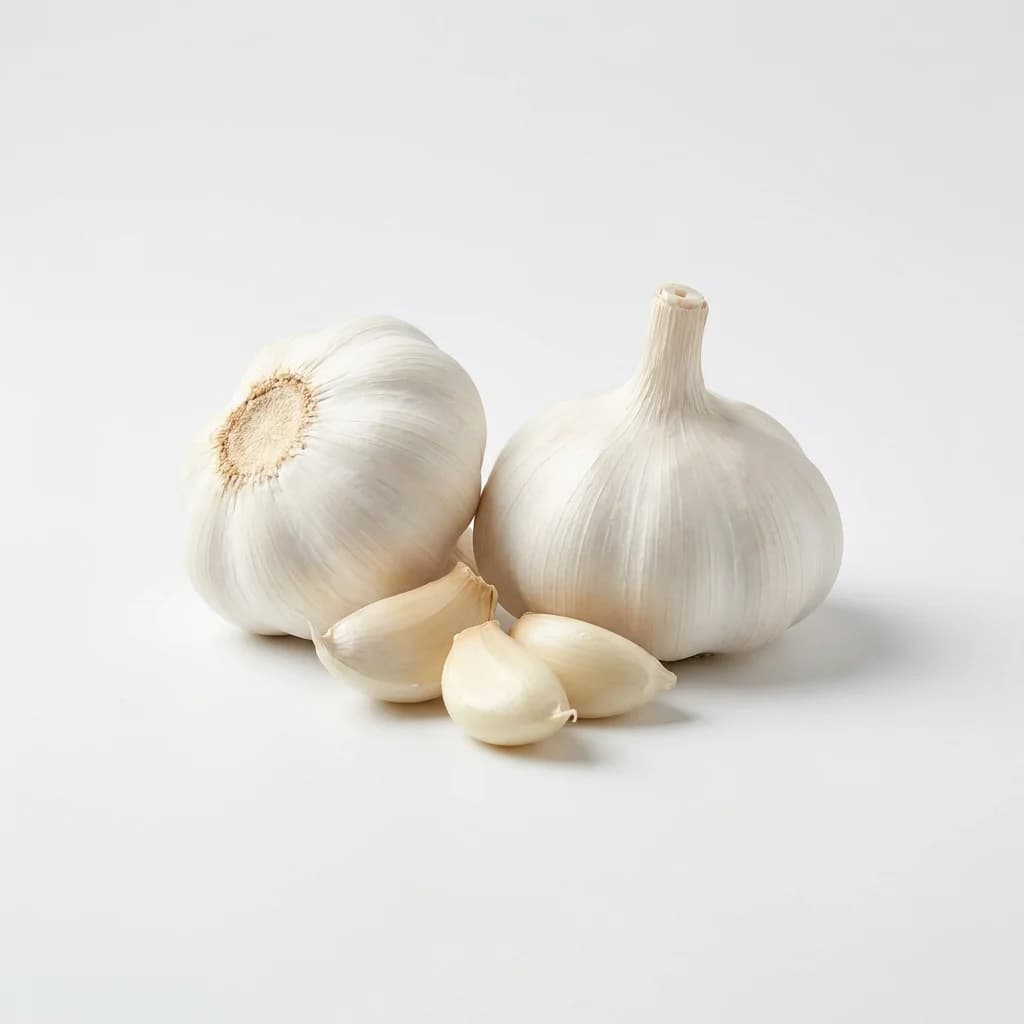
The minimum order volume for Chinese produce depends on the crop density and the required packing format. Published Nawa Fresh specifications show a minimum order volume for Fuji apples of 20 to 22 MT in a standard 1 x 40ft HC reefer. For garlic, the minimum order volume is 26 to 28 MT per 1 x 40ft container.
The packing follows the retail order, and the supplier handles the exact consolidation at origin to maximise the container payload while maintaining the correct reefer set-point.
What should buyers ask a fruit and vegetable supplier in Saudi Arabia?
Buyers should ask potential partners whether they can deliver duty paid through their own Saudi company or sell only on Cost and Freight terms. Under Cost and Freight the buyer is the importer of record, so the cost of a container of Fuji apples held at the border falls on the buyer. Under Delivered Duty Paid it falls on the supplier.
Nawa Fresh offers both routes. Buyers who hold their own import permit can buy on Cost and Freight or CIF terms. Buyers who prefer not to can buy Delivered Duty Paid through our Saudi company, which clears the cargo, carries the clearance liability and delivers to the warehouse. Either way, confirm in the contract where delivery takes place and what the price includes.
Do I need to pay customs duty separately on Delivered Duty Paid deliveries?+
Who provides the phytosanitary certificate for Chinese produce?+
Can the packing format be changed for retail distribution?+
What happens if a shipment fails border inspection?+
Do I need a customs broker?+
Request a quote for DDP warehouse delivery
See the current availability, packing formats and delivered pricing for this season's Chinese produce.
Get a quote