A longer route raises the cost of a mistake
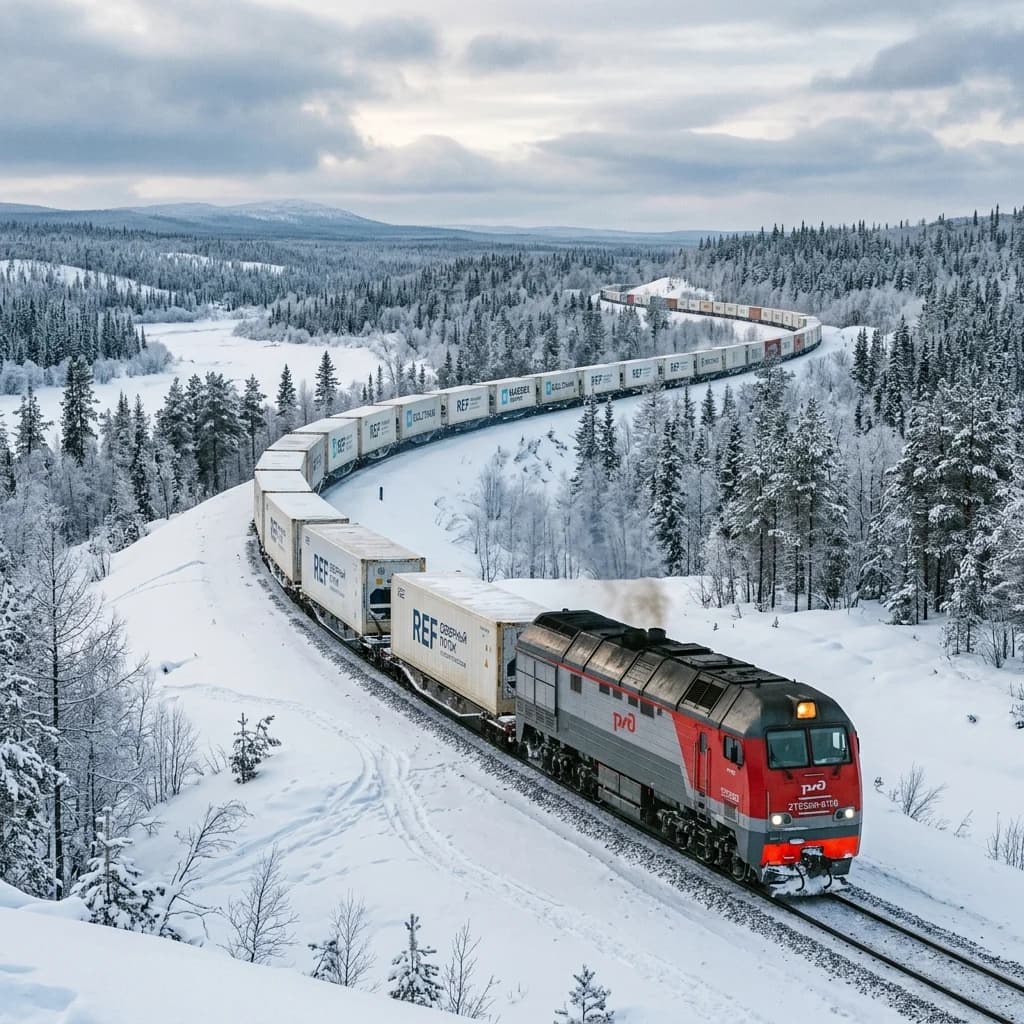
Shipments to Russia and the CIS travel a noticeably longer reefer route than short regional lanes. Those extra days in transit are not just a line on a schedule. Each additional day builds up risk. Temperature can drift from the setpoint, humidity fluctuates, ethylene accumulates inside the sealed container, and temperature swings create condensation. That is why we build our logistics so the outcome depends on protocol rather than luck.
The cold chain starts in the field
Freshness at discharge is set in the first hours after harvest. We remove field heat within four hours of picking, before the produce is loaded into the container. This matters most on long routes. If fruit enters the voyage warm, the reefer unit spends the first day chasing the target temperature instead of simply holding it.
A dedicated temperature setting for each crop
There is no single setting that works for all fruit. Bananas travel at 13 to 14 degrees Celsius, because a lower temperature causes chilling injury. We carry avocados at 5 to 7 degrees Celsius and citrus at 4 to 8 degrees Celsius. A difference of a few degrees decides whether a consignment arrives in marketable condition or with signs of decay.
Real-time monitoring
Every container carries data loggers that continuously record temperature, humidity, and door-opening events. If the readings deviate from the target parameters, the system sends an alert, and it can be acted on while the container is still in transit or at a transshipment point. On a long route with several handling points this control matters most.
Ethylene, the invisible ripening accelerator
Many crops release ethylene, which speeds up the ripening of the whole consignment inside the sealed container. For sensitive cargo we use potassium permanganate sachets, which absorb ethylene. On routes with extended transit times we deploy controlled-atmosphere containers, in which the air composition is tuned to slow ripening.
Packaging built for pressure and airflow
On a long leg, packaging works as part of the cold chain. We use telescopic cartons weighing from 2.5 to 13.5 kg, engineered for the vertical stacking pressure in a 40-foot High Cube reefer. Perforated liners allow gas exchange, and the palletization pattern preserves the channels that let cold air pass through.
How we organize the shipment
We ship in full containers, one 40-foot reefer per consignment, and work on FOB, CFR, or CIF terms. We confirm transit times per shipment rather than promising a fixed figure in advance. A long route involves more variables, such as vessel schedules, transshipment, and port procedures. For time-sensitive orders, an air-freight option is available.
Frequently Asked Questions
Do you guarantee an exact delivery time to Russia?+
What happens if the temperature in the container deviates in transit?+
Why is a controlled atmosphere needed if there are potassium permanganate sachets?+
Who is responsible for the temperature regime on CIF terms?+
Learn More About Our Products
Every product page publishes its own cold-chain protocols and trade specifications.
Browse the Catalog