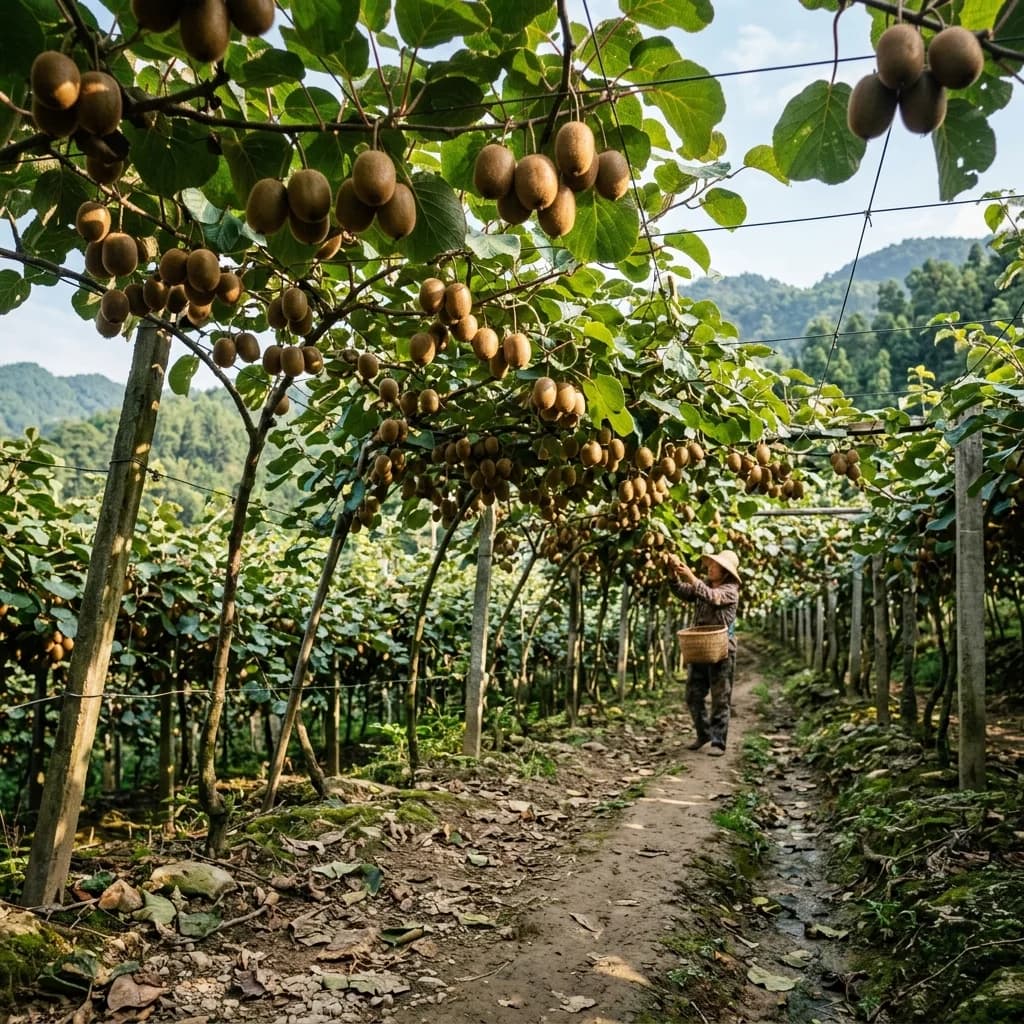
China grows roughly half the world's kiwifruit, more than New Zealand, Italy, and Greece combined, and most of it within a few hundred kilometres of the Qinling mountains in Shaanxi. Yet walk any GCC wholesale market in November and the kiwi on display is mostly European. That gap is an opportunity: Chinese fruit usually lands meaningfully cheaper, and when it's bought well, the difference on the shelf is hard to spot.
The key phrase is "bought well." Kiwifruit punishes sloppy procurement more than almost any other line. It's ethylene-sensitive, unforgiving of late pre-cooling, and easy to pick too early. Here's what we'd check before booking, in the order it matters.
Match your booking to the season window
Chinese Hayward is harvested from late October to early November, then supplied out of controlled-atmosphere storage through April. All of it can be good fruit, but what you should inspect changes across the season.
| Window | What you're buying | What to watch |
|---|---|---|
| November to December | Fresh-harvest fruit with the best firmness and price | Early fruit can be under-ripe, so insist on ≥6.5 Brix at loading |
| January to February | CA-storage fruit, still excellent | Ask for the storage-entry date and firmness at release |
| March to April | Late storage fruit | Shorter shelf life at destination, so plan faster rotation |
The spec sheet that actually protects you
A one-line "Grade A" promise means very little once the container has sailed. Put numbers in the contract instead:
- Brix at loading: minimum 6.5° for Hayward. Fruit picked below this never ripens to full flavour.
- Firmness: 6.5–9 kgf at loading, measured with a penetrometer, not by hand.
- Dry matter: 15%+ is the single best predictor of eating quality after ripening.
- Size and count: specify counts per 3.5kg tray. 27/30/33 are the GCC retail sweet spot.
- Residue compliance: request a current MRL panel tested against your market's standards, not just China's.
Cold chain: where good containers go wrong
The setting itself is simple: 0°C at 90–95% relative humidity, from packhouse to destination. What decides arrival quality is usually further upstream: fruit that entered pre-cooling within hours of picking travels firm for weeks, while fruit that sat on a loading dock overnight arrives soft no matter how well the reefer performed. Ask for the pre-cooling entry time, not just the container set-point.
Five questions to ask before you wire a deposit
- Is your packhouse GACC-registered for export, and can you share the registration number?
- Was this fruit pre-cooled within 12 hours of harvest?
- What were the Brix and firmness readings at loading, and will you send the QC report before the container sails?
- Is the container dedicated to kiwifruit, or shared with other cargo?
- What is your claims process if arrival readings fall outside spec?
None of these questions are aggressive. A serious exporter answers all five in one email, usually with documents attached. Hesitation is also an answer.
When is the best time to book Chinese kiwifruit for the GCC?+
How long is the transit from China to the Gulf?+
Green or gold kiwifruit for the GCC market?+
Want a kiwi quote with the QC report included?
Tell us your volumes and destination port, and we'll send current Shaanxi pricing with loading specs and our pre-shipment checklist.
Request a quote