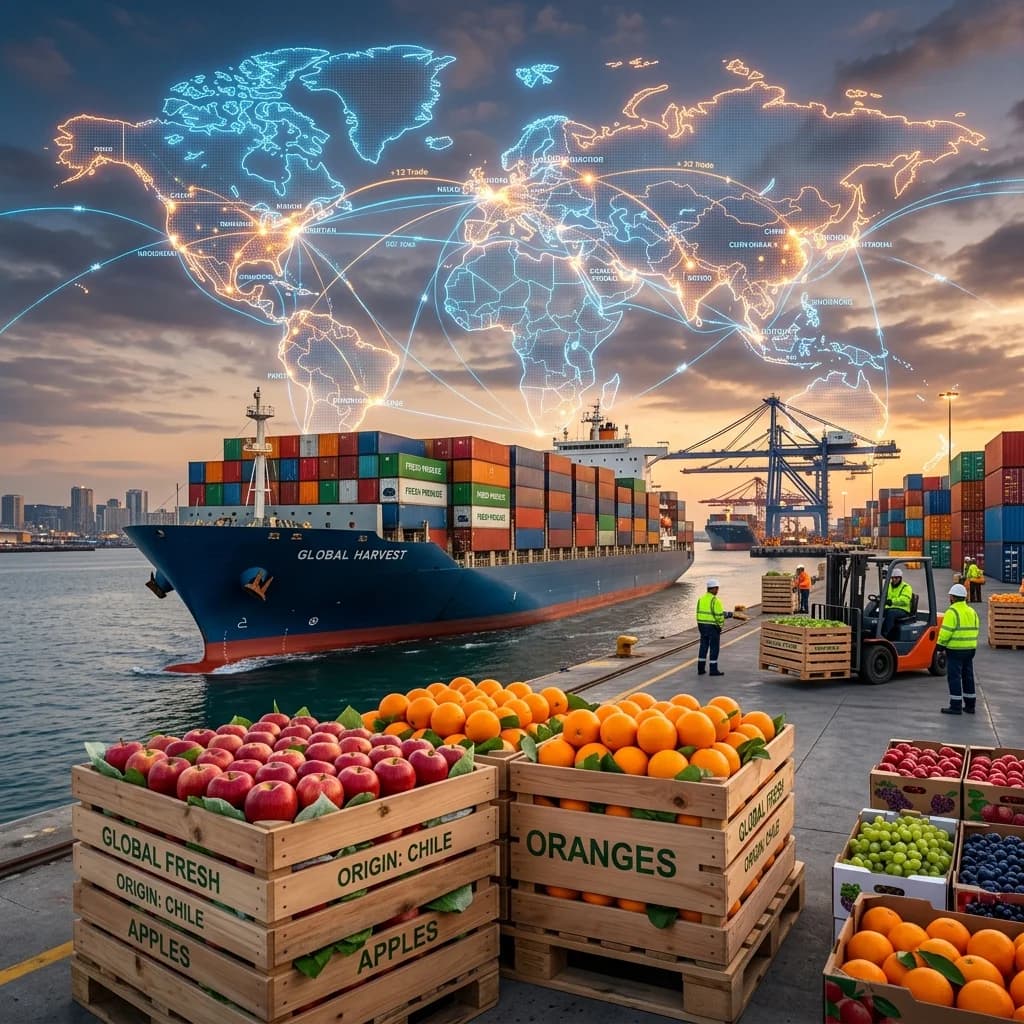
Every wholesale buyer sourcing fresh produce at full container load (FCL) volume ends up choosing between the same three channels: an online marketplace, a regional trading company, or a direct-from-source exporter. None of them is wrong. Each one trades speed, price, and accountability differently, and the right choice depends on what you actually need for this shipment.
The Three Channels for FCL Sourcing
| Channel | What it offers | Main trade-off |
|---|---|---|
| Online marketplace (Alibaba, Tridge, Made-in-China, Volza) | Scale, price discovery, many sellers in one place | Verifying which listing is genuinely direct-from-source takes real diligence |
| Regional trading company | In-market relationships, local stock, familiarity with import rules | Multi-origin resale means less per-product technical depth and an extra markup layer |
| Direct-from-source exporter | No broker markup, a named origin, a single accountable relationship | Quality varies between exporters. Some publish real trade specs, some do not |
Online Marketplaces
Marketplaces like Alibaba, Tridge, Made-in-China, and Volza aggregate thousands of sellers, which makes them the fastest way to compare price across a wide pool of suppliers. The trade-off is verification. A listing that says “direct from farm” is only as reliable as the seller behind it, and a marketplace has no practical way to enforce that claim across every listing on the platform.
Regional Trading and Distribution Companies
Trading companies with real retail relationships in your market, the kind that already supply major supermarket chains, solve a different problem: local stock, familiar paperwork, and someone in your time zone. What they usually cannot offer is deep technical detail on any single product, since they are reselling multiple origins and categories rather than running one supply chain end to end.
Direct-From-Source Exporters
A direct-from-source exporter cuts out the broker layer entirely: one relationship, one accountable party, and in principle full visibility into where the product actually comes from. In practice, this category is uneven. Some exporters publish real grading, packaging, HS codes, and seasonality on every product page. Others are thin promotional sites with a contact form and little else.
What to Check Before You Commit, Regardless of Channel
- Are grading, packaging, and HS codes published for the exact product you want, not just a general category?
- Is the origin region and port of loading named, rather than a vague “global sourcing” claim?
- Does the seasonality calendar match the month you actually plan to order?
- Which Incoterms are offered (FOB, CFR, CIF), and does that match how your logistics team wants to handle the shipment?
- What happens if a shipment underperforms? Get this answered before you sign, not after a container arrives soft.
Frequently Asked Questions
What does FCL mean and why does it matter for sourcing?+
What is the difference between FOB, CFR, and CIF?+
How do I verify that an exporter is actually direct-from-source, not reselling?+
Can I order multiple products from different categories in one container?+
Ready to Source Direct?
Tell us what you need and our trade team will reply within 24 hours with pricing tailored to your volume and destination.
Request a Quote