What Grade of Avocado Do European Buyers Expect?
European retail and wholesale chains buy almost exclusively Class I fruit under the UNECE FFV-42 standard for avocados. Class I allows only minor defects that never reach the flesh or compromise how the fruit keeps and presents. If you are placing a first order from a new origin, this is the specification you write into the contract before anything else.
Grade sits on top of maturity. A Hass avocado is harvested by dry matter content, not by color or feel. The Codex and UNECE minimum is 21 percent dry matter at harvest, and most European importers ask for closer to 23 percent because higher dry matter ripens more evenly and holds better on the shelf. Fruit picked below 21 percent ripens poorly and generates claims. When you evaluate a supplier, ask how they test dry matter and at what threshold they release a lot for picking.
Which Sizes and Pack Formats Move in Europe?
The count that sells fastest in Europe is 16 to 18 fruit per 4kg box, with count 20 also moving well. Count refers to how many avocados fill the box, so a lower number means larger fruit. Retail programs tend to anchor on 16 to 18 because that size suits both single unit sales and pre-packed twin or quad trays.
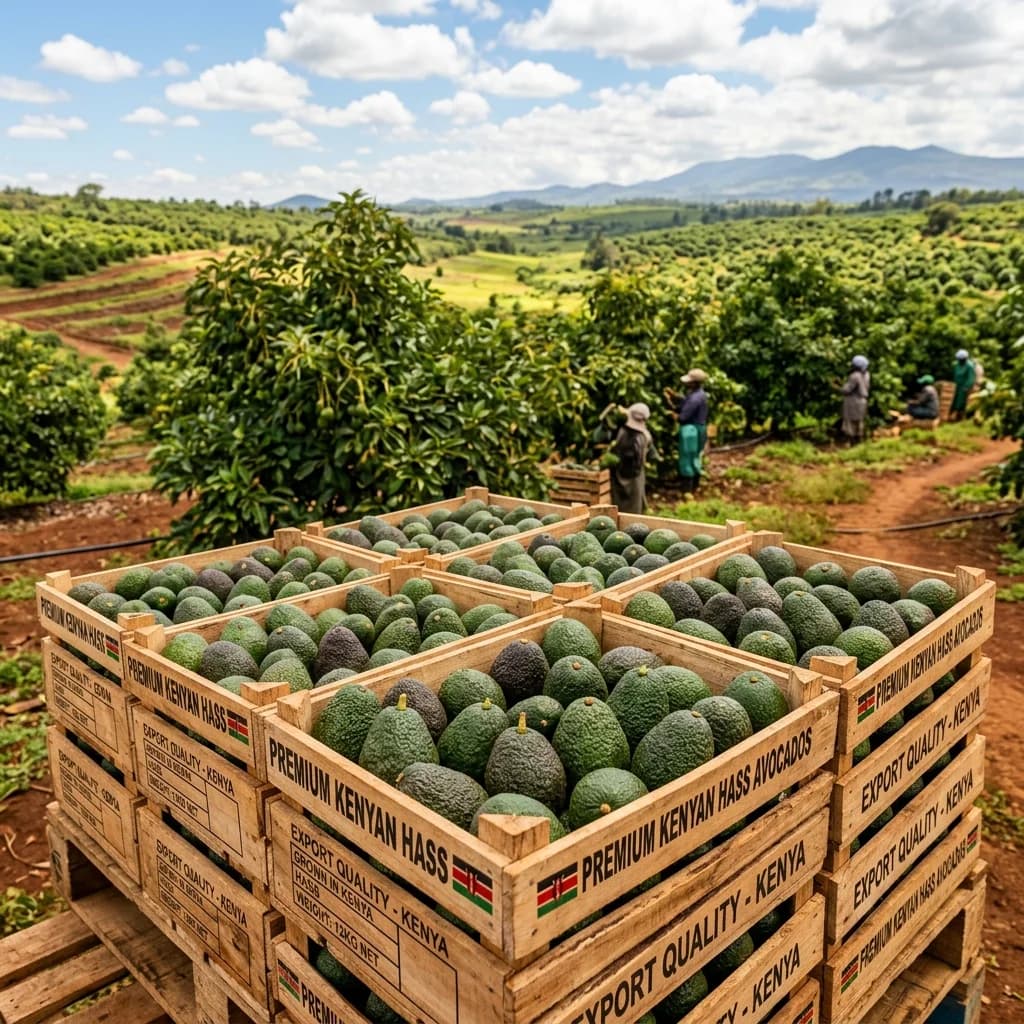
Two pack formats cover most of the trade. The 4kg cardboard box is the standard wholesale unit and ships ready for distribution. The 10kg crate suits importers who run their own ripening rooms and repack into retail formats themselves. Decide which model your business runs before you request a quote, because it changes the price per kilo and the box count per pallet.
When Is Kenyan Hass Available?
Hass avocado from Kenya's Central Highlands ships by sea from March to October, with the peak from April to August. Kenya's regulator closes sea shipment each year in late October or early November and reopens it in March or April, once fruit tests mature, so build a programme around that window rather than a full calendar year.
Kenya also enforces a maturity driven start to each peak window. The national authorities hold back exports early in the season until dry matter thresholds are met, which is designed to keep immature fruit out of the market and protect the origin's reputation. For you, that means committing volume in the first weeks of the peak window carries a scheduling risk. Build a little flexibility into early season delivery dates and confirm current maturity testing before you fix arrival slots with your customers.
How Do Avocados Ship from Kenya to Europe?
Avocados move in refrigerated containers held at 4 to 6 degrees Celsius, which gives roughly 14 to 21 days of usable shelf life in transit. Most Kenyan fruit for Europe ships in controlled atmosphere reefers, where the container regulates carbon dioxide, oxygen, and ethylene to slow ripening. Controlled atmosphere is what lets fruit picked in the Central Highlands arrive in Rotterdam or Antwerp still firm and green.
Fruit loads at the port of Mombasa. Sailings to Northern Europe often route through a transhipment hub such as Salalah in Oman, so the door to door time is longer than a single direct leg suggests. Factor the full transit plus the ripening time at your end when you plan against a promotion or a fixed retail launch date.
What Documents and Trade Terms Apply to an FCL Order?
Every shipment needs a phytosanitary certificate from the origin authority, and the fruit has to meet EU food safety rules, maximum residue limits, and labeling requirements before it clears. The customs classification for fresh avocados is HS 0804.40. Getting the paperwork right the first time avoids holds at the port of entry, which are expensive when the clock on shelf life is already running.
We ship full container load, one 40ft reefer per order for fresh produce, and quote on FOB, CFR, or CIF terms so you can match the deal to how your own logistics are set up. Payment is T/T 50/50 or an irrevocable letter of credit at sight. If you are new to a Kenyan origin, CIF with an L/C at sight is the cleanest way to run a first shipment while you build a track record.
Why Buy Direct from Kenya's Central Highlands?
We source Hass and Fuerte from Kenya's Central Highlands, a long established growing region whose altitude and climate suit late season Hass. Buying direct from origin shortens the chain between the orchard and your warehouse, which matters for a product measured in days of shelf life.
We publish the real trade specs for each product, including grading, packaging, HS code, port of loading, minimum order quantity, and seasonality, rather than hiding them behind a contact form. You can price a deal and check that our fruit fits your program before you ever send an inquiry. We also work to internationally recognized agricultural standards across sourcing and handling. When you are ready, send the count, format, and Incoterm you need and we will quote against a specific container.
Frequently Asked Questions
What grade and size should I specify for the European market?+
When can I get Kenyan Hass avocados?+
What is the minimum order and how does it ship?+
Which Incoterms and payment terms do you offer?+
Ready to Import Hass Avocado from Kenya?
See the full grading, packaging, and seasonality specs for Hass avocado, or send a request for quote for your next container.
View Hass Avocado Specs