Why the Set-Point on the Controller Is Only Half the Job
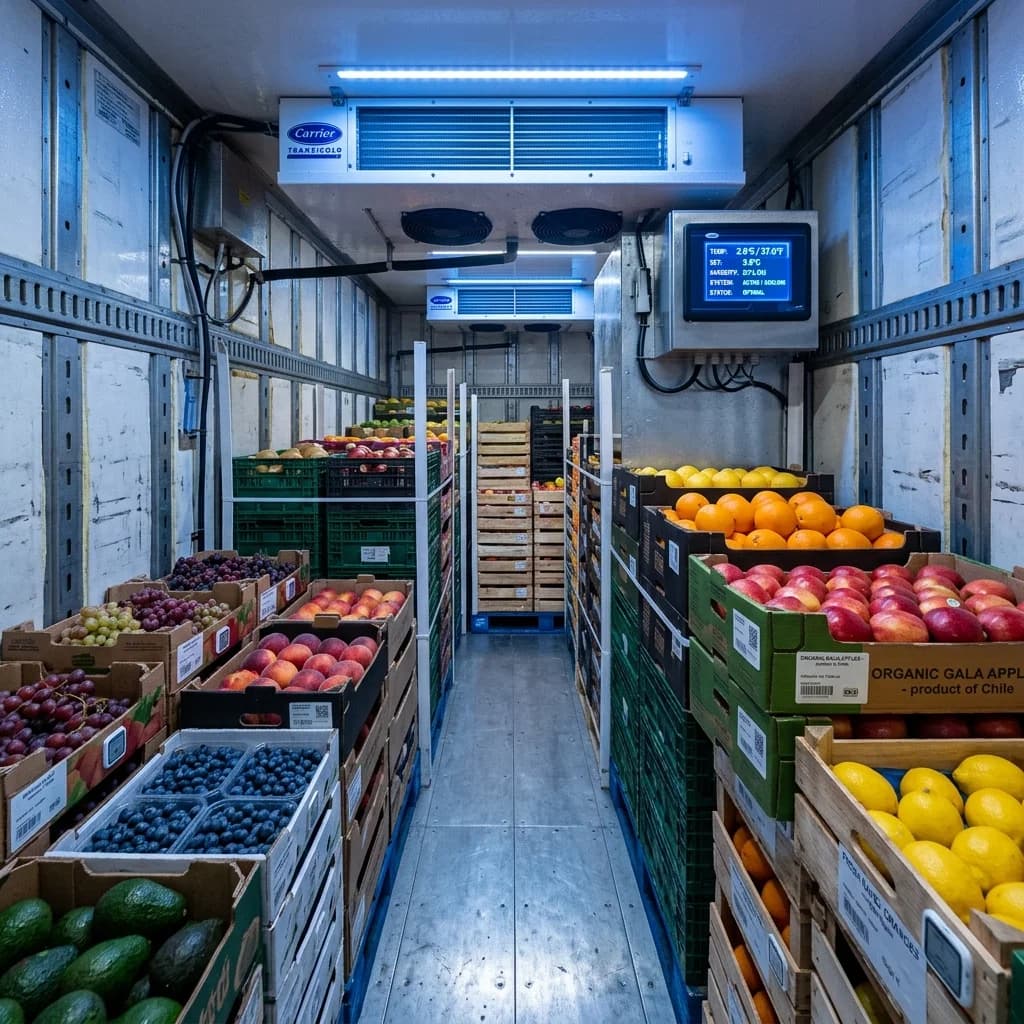
A reefer does not cool a container the way a home refrigerator cools a room. It pushes chilled air out through the floor T-bars, up through and around the cargo, and back to the unit at the top. The temperature you read on the controller is the supply air the machine delivers, not the pulp temperature of the fruit sitting in the middle of the load. If air cannot travel through and around your cartons, the box on the controller can read a perfect 5 degrees Celsius while the core of the pallet sits several degrees warmer.
That is why we treat airflow and temperature as one system, not two separate settings. A correct set-point on a badly stowed load still gives you hot spots, condensation, and uneven ripening. Get the airflow path right, hold the set-point steady, and the whole container arrives on spec.
Pre-Cooling: The Four-Hour Window That Decides the Voyage
Field heat is the enemy you fight before the container doors ever close. Produce harvested in a Kenyan or Ugandan afternoon carries pulp temperatures far above its transit target, and a reefer unit is built to hold temperature, not to pull large amounts of heat out of a warm load. Ask it to do the latter and it runs hard, the load cools unevenly, and shelf life is already spent before the ship sails.
We remove field heat within four hours of harvest, before loading. Bringing the pulp down to near its transit target first means the container only has to maintain a cold load rather than fight a warm one. For a buyer, this is the single decision that most affects arrival quality, and it happens on day one, hours after picking.
Product-by-Product Transit Targets
Here is where product lines split apart. The temperature that protects a banana will chill damage an avocado, and the temperature that suits an avocado will freeze a grape. These are the targets we run.
Bananas: 13 to 14 degrees Celsius. Bananas are tropical and chill sensitive. Take them much below 13 degrees and you get grey, dull skin and blocked ripening. This is a warm reefer setting by fruit standards, which surprises importers who assume colder is always safer.
Avocados: 5 to 7 degrees Celsius. Cold enough to slow respiration and hold the fruit firm through transit, warm enough to stay clear of chilling injury. Avocados are also strong ethylene producers, which matters for how they are stowed and what travels near them.
Citrus: 4 to 8 degrees Celsius. Oranges, lemons, and mandarins tolerate a cooler band and benefit from it on long routes, with the exact point inside that range set by variety and origin.
For products outside these three, general industry practice runs colder. Table grapes are commonly shipped close to 0 degrees Celsius, and apples are typically held around 0 to 4 degrees Celsius. Treat those as well established norms rather than a one size number. We confirm the precise set-point per shipment against variety, origin, and voyage length rather than defaulting to a category average.
Ethylene Management: Slowing the Clock in Transit
Ethylene is the ripening hormone many fruits release as they mature. In a sealed container, that gas accumulates and accelerates ripening across the whole load, which is a problem when your fruit needs to arrive firm and finish ripening at destination on the buyer's schedule.
For ethylene sensitive cargo we place potassium permanganate sachets in the load. These absorb ethylene gas and slow the ripening reaction during transit. On extended transit routes where a longer voyage means more time for the fruit to advance, we use controlled atmosphere containers that adjust the oxygen and carbon dioxide balance to hold produce in a more dormant state. The practical result for you is fruit that lands with more of its shelf life intact and more room to sell it before it turns.
Packaging and Palletization: Building a Load That Breathes
Packaging in a reefer does two jobs at once. It has to survive the vertical stacking pressure of a fully loaded 40ft High Cube, and it has to let cold air move through the cargo. Those goals pull against each other, and the carton design is where they get resolved.
We use telescopic cartons ranging from 2.5kg to 13.5kg, engineered to carry stacking load without crushing the fruit underneath, and fitted with perforated liners so gas and cold air can exchange rather than sitting trapped around the produce. Palletization is then configured to maximize how much of the container we use while preserving the airflow channels that let every pallet cool evenly. A tightly packed container with blocked airflow is worse than a slightly lighter one that cools uniformly. Uneven cooling is what produces the claim at the other end.
Transit Monitoring: Proof, Not Assumptions
Setting the temperature correctly and confirming it held are two different things. We place data loggers in every container that record temperature, humidity, and door-opening events across the voyage, with real-time alerts when readings deviate from the specified range. If a unit drifts or a door is opened at a transshipment port, we know while the container is still moving, not after it lands.
For an importer, this is the difference between a claim you can substantiate and a dispute that turns into your word against the carrier's. The logger data is a continuous record of the cold chain your cargo actually experienced, which matters for quality assurance and for any conversation with insurers.
Frequently Asked Questions
Can I ship bananas and avocados in the same reefer container?+
What temperature do you set for grapes and apples, since those are not in your listed targets?+
Why is the banana temperature so much warmer than everything else?+
How do I know the temperature actually held during the whole voyage?+
Check the Transit Specs for Your Product
Each product page publishes its own grading, packaging, and seasonality details alongside the cold-chain protocols covered here.
Browse the Catalog