To import fresh garlic directly, buyers need to align their variety requirements, select a packing format between 2 and 10 kg, and plan for a full 40-foot reefer container carrying 26 to 28 metric tonnes. Because the origin grows the vast majority of the world's crop, importers who coordinate their cold chain and documentation directly with garlic suppliers in China secure better margins than those buying on the spot market.
What is China's share of the global garlic market?
China dominates the global fresh garlic trade. In 2021, the country accounted for 80 percent of the global volume, according to customs data published by the United States International Trade Commission. This immense scale means importers can source steady volumes throughout the year, switching from fresh harvested crops in the summer to cold-stored stocks as the season progresses.
Buyers looking for reliable year-round availability will find that the infrastructure in major producing regions supports consistent exports regardless of the month. Sourcing from the primary global supplier removes the seasonal supply gaps common in smaller producing nations.
Specifying your variety and grading
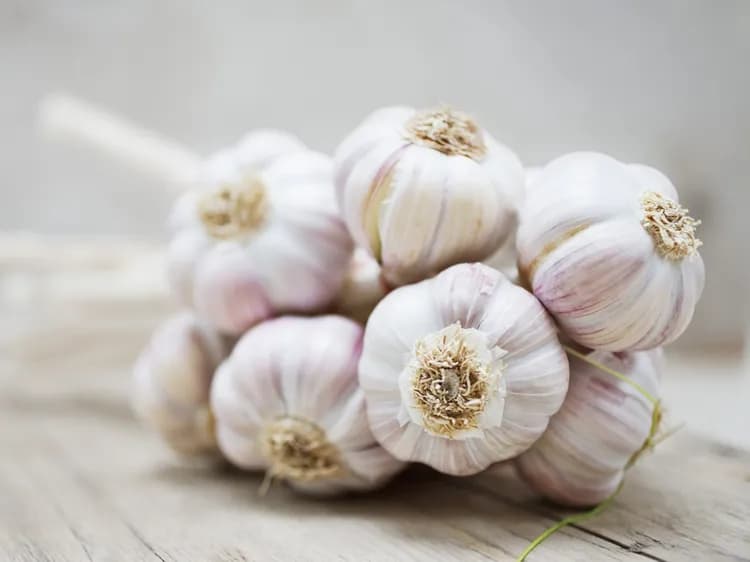
Importers must define the exact garlic variety their local market expects before negotiating volumes. The two main export categories are pure white and normal white, which is sometimes called purple or red garlic. Pure white has a bright, uniform skin favoured by premium retail channels, while normal white carries distinct purple stripes and is often preferred in wholesale or processing markets for its stronger flavour.
Alongside the variety, buyers must specify the bulb diameter. Grading dictates both the price and the packing format, with larger bulbs commanding a premium and requiring careful placement in export cartons to prevent bruising.
How is imported garlic packed for shipping?
Packing formats depend entirely on the buyer's distribution channel. Suppliers offer loose packing in mesh bags for wholesale markets and neatly arranged cartons for retail shelves. We pack to order across an available weight range of 2 to 10 kg, ensuring the final product matches the buyer's handling capabilities.
| Packing format | Common weight | Best suited for |
|---|---|---|
| Mesh bags (loose) | 10 kg | Wholesale markets and processors |
| Loose cartons | 10 kg | Distributors requiring sturdy stacking |
| Pre-packed mesh in cartons | 2 to 5 kg | Retailers and supermarket shelves |
The 10 kg mesh bag is the standard format for wholesale buyers moving large volumes quickly, as it offers the highest ventilation at the lowest packaging cost. Cartons provide stronger protection during long sea transits and are necessary when the destination market requires individual retail packs or smaller weights that cannot be safely stacked in bags.
Planning the container load and minimum order
Ocean freight dictates the purchasing scale for fresh produce. Our minimum order volume is one 40-foot container, which is standard across the export trade to maintain cold chain integrity. A reefer is a refrigerated shipping container that keeps the cargo at a specific temperature setting, known as the set-point, throughout the voyage.
A 40-foot reefer container holds a capacity of 26 to 28 metric tonnes of fresh garlic. Maximising this payload reduces the freight cost per kilo, making the import commercially viable. The exact tonnage depends on whether the cargo is palletised or hand-stacked, as hand-stacking utilises the maximum internal volume of the container.
Managing the cold chain to prevent sprouting
Garlic is highly sensitive to temperature fluctuations. A break in the cold chain between the packhouse and the port of departure causes the bulbs to break dormancy and sprout during transit. Importers should establish clear expectations with their supplier about pre-cooling the cargo before loading.
The container must be plugged in and running at the correct temperature before the doors are sealed. Buyers should instruct their suppliers to place temperature recorders inside the container to verify that the cooling remained constant from the Chinese packhouse until arrival at the destination port.
What documents do you need to clear customs?
Discrepancies in paperwork are a leading cause of port delays and demurrage charges. Importers must coordinate with their customs broker to ensure the Bill of Lading exactly matches the actual carton counts, weights, and sizes loaded into the container.
Standard practice is to have the packing list, commercial invoice, and Certificate of Origin reviewed by the broker before the supplier submits the final drafts. Produce regulations vary entirely by destination, so buyers must confirm the current phytosanitary and import permit requirements with their local customs authority before the vessel sails.
Order direct garlic from China
See our current packing formats, verify container load specifications, and request a CFR quote for this season's fresh garlic.
View garlic specifications